
Dear Parent,
If you’re reading this, you already care deeply about your child’s wellbeing. That alone puts you ahead. But caring isn’t always enough when we’re fighting invisible enemies—generational cycles of pain and violence that have been passed down like unwanted heirlooms, from grandparent to parent to child.
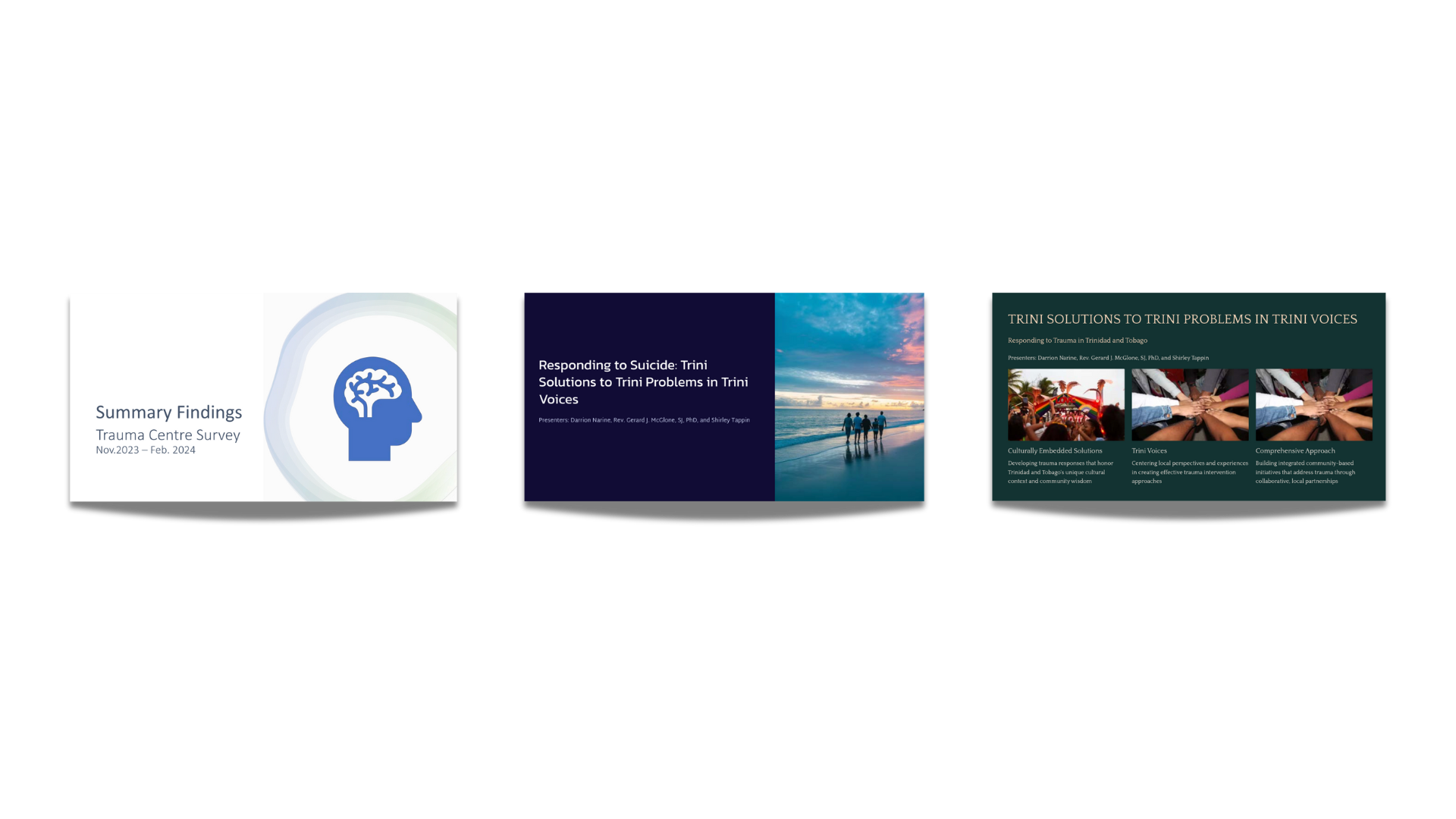
Between November 2023 and February 2024, researchers surveyed 16 Catholic organisations across Trinidad and Tobago, gathering data from schools serving 42,710 students, programmes reaching over 100,000 parents, and communities spanning every corner of our twin islands. What they discovered should concern every parent—but more importantly, it should empower you.
Because here’s the truth the research reveals: You have the power to break the cycle. Right now. In your home. With your children.
The survey found that only 4 organisations tracked how many people needed help versus how many actually received it. The gap is staggering. Hundreds of children and families are suffering in silence, not because help doesn’t exist, but because we don’t know what to look for, what to do, or where to turn.
This article changes that. Based on hard data from organisations serving nearly half a million people, here are the 5 critical things you need to know to protect your children and break generational cycles of pain and violence.
1. RECOGNISE THE SIGNS: Your Child May Be Suffering Right Now (And You Might Not Know It)
The Alarming Reality
40% of children surveyed in Trinidad and Tobago have thought about harming themselves.
Read that again. Nearly half of our children have contemplated self-harm. Not “problem kids” or “troubled youth”—our children. Yours. Mine. The ones sitting at our dinner tables, the ones we kiss goodnight, the ones we think are “fine.”
What the Data Shows
The survey identified 11 major impacts observed across organisations serving thousands of children. These are the signs that your child may be carrying pain they can’t articulate:
Emotional/Mental Signs:
- Depression (reported as prevalent)
- Suicidal thoughts
- Low self-esteem
- Anxiety or insomnia
Behavioural Signs:
- Acting out – aggression, defiance, “bad behaviour”
- Self-harm – cutting, burning, hitting themselves
- Rage attacks – explosive anger that seems out of nowhere
- Promiscuity – especially in teens seeking validation
- Substance abuse – alcohol, marijuana, other drugs
- Sex or pornography addictions
Physical Signs:
- Psychosomatic disorders – headaches, stomach aches, mysterious pains with no medical cause
The Age Groups Most at Risk
Group B (12-19 years old) emerged as the most vulnerable demographic across nearly every category. But here’s what many parents miss: the pain usually starts much earlier.
Children in Group A (0-11 years) are experiencing:
- Cyber abuse
- Neglect
- Sexual abuse
- Physical abuse
- Emotional/psychological abuse
By the time they’re teenagers, these early wounds have festered into the symptoms listed above.
What You Can Do TODAY:
✅ Start Observing Without Judgement
Tonight, watch your child. Not their behaviour—them. Ask yourself:
- Have they withdrawn from activities they used to love?
- Are they sleeping too much or too little?
- Have their grades suddenly dropped?
- Are they irritable, angry, or unusually quiet?
- Do they avoid family time?
- Have their friend groups changed dramatically?
- Are they spending excessive time online?
- Do they have unexplained injuries?
✅ Create a “Check-In” Ritual
Starting today, establish a daily moment where you ask: “How are you feeling today? Not ‘how was school’—how are YOU?”
The Samaritan Movement’s research shows that when students were asked how they felt, many said: “No one is listening. No one cares.”
Be the one who listens. Be the one who cares.
✅ Learn the Language of Pain
Your 8-year-old may not say “I’m depressed.” They might say “my stomach hurts” every morning before school. Your 15-year-old may not say “I’m thinking about suicide.” They might joke about death, give away prized possessions, or write dark poetry.
Pain in children doesn’t always look like sadness. It often looks like anger, silence, or “bad behaviour.”
2. UNDERSTAND THE CYCLE: Your Own Pain is Affecting Your Parenting (And That’s Not Your Fault—But It Is Your Responsibility)
The Uncomfortable Truth
The research identified what experts call the “Web of Harm”—an interconnected chain showing how pain flows from one generation to the next:
Dysfunctional Families → Chaotic Classrooms → Crime & Community Violence → Poor Academic Performance → Community Grief → Neglect and Abuse in All Forms

Here’s the part that’s hard to hear: If you were hurt as a child, you’re likely—unconsciously—passing that pain to your own children.
This isn’t about blame. Most parents in Trinidad and Tobago grew up in homes where:
- “Spare the rod, spoil the child” was gospel
- Children were seen, not heard
- Emotional expression was weakness
- “Blows does teach you”
- Your parents did the best they could with what they had
But hurt people hurt people. And healed people heal people.
What the Survey Revealed About Parenting
When organisations were asked about the types of harm they encountered, neglect emerged as one of the top concerns across multiple settings—in children’s care homes, educational settings, and migrant communities.
Neglect doesn’t always mean you’re not feeding your child. It can look like:
- Emotional neglect: Not asking how they feel, dismissing their emotions
- Physical neglect: Not being present because you’re overwhelmed by work/stress
- Developmental neglect: Not providing guidance, boundaries, or life skills
- Medical neglect: Ignoring mental health needs because “therapy is for crazy people”
Physical and emotional abuse were also prevalent across multiple settings. Often these patterns reflect what parents themselves experienced as children.
The Generational Pattern
The research shows suffering doesn’t end at age 19. Adults in Group D (36-59)—many of them parents—are experiencing:
- Emotional and psychological harm in relationships and workplaces
- Physical abuse
- Spiritual/organisational harm
- Stress and anxiety without support systems
- Decades of unprocessed pain from their own childhoods
When parents carry unhealed wounds, they unconsciously perpetuate cycles:
- A father who was beaten as a boy beats his son, believing it’s discipline
- A mother who was emotionally neglected dismisses her daughter’s feelings
- A parent who witnessed domestic violence normalises screaming matches
- Adults who grew up in chaos create chaotic homes because it’s all they know
What You Can Do TODAY:
✅ Take an Honest Inventory
Get a journal. Answer these questions truthfully:
- How were you disciplined as a child? Do you use the same methods?
- What emotional wounds are you still carrying from your childhood?
- When you’re stressed, how do you treat your children?
- What did you need as a child that you never got? Are you giving that to your children?
- What parenting patterns are you repeating without thinking?
✅ Break One Pattern This Week
You don’t have to heal everything at once. Pick one harmful pattern you recognise and commit to changing it.
Examples:
- If you yell when frustrated, practise taking 3 deep breaths before responding
- If you dismiss emotions, try saying “Tell me more about that” when your child shares feelings
- If you use physical punishment, research positive discipline alternatives
- If you’re emotionally distant, give one genuine hug daily with the words “I love you”
✅ Get Your Own Help
The Samaritan Movement’s Parenting for Hope & Healing programme includes:
- Parent circles where you can share experiences without judgement
- Trini Stories featuring local parents modelling healthy approaches
- Spiritual and cultural tools honouring our traditions as sources of strength
- Family systems support addressing whole-family healing
You cannot pour from an empty cup. Healing yourself is how you heal your children.
3. CREATE SAFE SPACES: Home Must Be a Refuge, Not Another Battlefield
What the Research Says
Survey data shows that the most common forms of harm experienced by children occur across multiple settings: home, school, community, and online. When children are hurt everywhere, they have nowhere to heal.
Your home must become the safe space where healing happens.
Organisations reported that children experiencing abuse show these patterns:
- Acting out behaviours – often because home isn’t safe
- Rage attacks – unprocessed pain exploding
- Low self-esteem – from being criticised, shamed, or ignored at home
- Anxiety – from unpredictable environments
The survey also revealed that most organisations have limited personnel dealing with suffering children, and even fewer have trained staff. This means most of the healing must happen at home.
What Creates Unsafe Spaces
Based on the harm patterns identified, homes become unsafe when there is:
Physical Unsafety:
- Violence (hitting, slapping, beating)
- Witnessing domestic violence between parents
- Unpredictable explosions of anger
- No privacy or personal space
- Neglect of basic needs (food, shelter, clothing)
Emotional Unsafety:
- Constant criticism and belittling
- Dismissal of feelings (“Stop crying or I’ll give you something to cry about”)
- Comparing children to siblings or others
- Conditional love (“I’ll love you if you get good grades”)
- Emotional manipulation or guilt-tripping
- Using shame as discipline
Psychological Unsafety:
- Chaos and unpredictability (never knowing what mood parent will be in)
- Parents who are emotionally volatile
- Being made to keep family secrets
- Gaslighting (“That didn’t happen,” “You’re too sensitive”)
- Triangulation (being put in middle of parent conflicts)
What Creates Safe Spaces
The Samaritan Movement’s Community as Family model provides a blueprint. Safe homes have:
Predictability and Structure:
- Consistent routines (meal times, bedtimes, family time)
- Clear, reasonable rules that are enforced consistently
- Predictable consequences (not punishment based on parent’s mood)
Emotional Safety:
- Permission to express all emotions (anger, sadness, fear, joy)
- Active listening without immediate judgement or “fixing”
- Validation (“I see you’re upset. That must be hard.”)
- Apologies when parents make mistakes
- Affection freely given (hugs, “I love you,” physical presence)
Physical Safety:
- Zero tolerance for violence of any kind
- Private spaces for children (even if just a corner of a room)
- Boundaries respected (knocking before entering, respecting “no”)
- Basic needs consistently met
Psychological Safety:
- Honesty and transparency (age-appropriate)
- No family secrets children must carry
- Problems addressed directly, not through children
- Mistakes seen as learning opportunities, not character flaws
- Unconditional positive regard (“I love you even when I don’t like your behaviour”)
What You Can Do TODAY:
✅ The 24-Hour Violence-Free Challenge
Starting now, commit to 24 hours with zero violence:
- No hitting, slapping, pinching, or physical punishment
- No threats of violence
- No witnessing violence between adults
- No violent language (“I’ll beat you,” “I’ll box you,” “Wait till your father gets home”)
After 24 hours, try another 24. Then another.
When you want to hit, ask yourself: “What am I really feeling? What do I actually want my child to learn right now?”
✅ Create a Family “Safe Word”
Sit with your family and choose a word that means “I need help, I need space, or things are escalating.” When anyone says this word:
- Everyone takes a 10-minute break
- Deep breaths, separate spaces
- Come back when calm to discuss
This works for both children and parents.
✅ The Daily Connection Ritual
Research shows that connection prevents many behavioural issues. Create one non-negotiable daily ritual:
- 15 minutes of undivided attention per child
- No phones, no TV, no distractions
- Let the child choose the activity
- Be fully present
The Samaritan Movement’s Student Family programmes showed that when children feel genuinely connected to caring adults, their symptoms of suffering decreased significantly.
4. USE CULTURAL STRENGTHS: Caribbean Wisdom Is Your Secret Weapon
What Makes Samaritan Movement Different
The survey data comes from a uniquely Caribbean approach. The Samaritan Movement describes their methodology as “evidence-based, culturally-inspired”—and this matters more than you might think.
Too often, mental health approaches are imported from America or Europe with little adaptation for Caribbean culture. They fail because they don’t account for:
- Our collectivist culture (community over individualism)
- Our spiritual foundations (faith as strength, not weakness)
- Our oral traditions (storytelling, proverbs, folk wisdom)
- Our musical heritage (rhythm, dance, expression)
- Our family structures (extended families, “village” raising children)
- Our resilience (survival skills from colonisation, slavery, migration)
The research shows that organisations serve parish communities and offices extensively. This reflects the central role of faith and community in Caribbean life—and these are healing resources, not problems to fix.
Our Cultural Strengths for Breaking Cycles
1. The Village Concept
Traditional Caribbean parenting understood: “It takes a village to raise a child.”
The survey data validates this. Organisations serving children in education, parish communities, migrant communities, and adults in education are all interconnected. When schools, churches, extended family, and neighbours work together, children thrive.
Your ancestors knew: Don’t parent alone. Let aunties, godparents, neighbours, church family, and elders help raise your children.
2. Storytelling and Oral Tradition
The Samaritan Movement created “Trini Stories”—micro-learning videos featuring local parenting wisdom. This taps into our strength: we learn through stories, proverbs, and lived experience.
You don’t need perfect English or a psychology degree. You need your grandmother’s wisdom, your uncle’s example, and your pastor’s guidance.
Your ancestors knew: Stories teach better than lectures. Share your own struggles, your victories, your lessons learnt.
3. Spirituality and Faith
The survey shows many organisations are faith-based and consider themselves adequately aware of harm and its effects. Church and religious counsellors were identified as critical resources.
Caribbean people draw strength from:
- Prayer and meditation
- Church community support
- Biblical wisdom and teachings
- Spiritual practices (fasting, worship, testimony)
- Faith that “trouble don’t last always”
Your ancestors knew: Faith isn’t escape—it’s resilience. Spiritual practices regulate emotions, provide meaning during suffering, and connect us to something bigger than our pain.
4. Music, Rhythm, and Movement
The Samaritan Movement’s Student Family programmes integrate:
- Arts therapy
- Drama therapeutic interventions
- Cultural expression
Caribbean culture is rich with music—calypso, soca, steelpan, parang, rapso, dancehall. These aren’t just entertainment; they’re emotional outlets.
Your ancestors knew: When words fail, music speaks. Let your children sing, dance, play instruments, write lyrics. Movement releases pain the body holds.
5. Food as Love and Connection
Caribbean culture centres around food—Sunday lunch, family cooking, sharing meals. This isn’t just feeding; it’s communion.
The survey identified neglect (lack of food, care, shelter) as a major concern. But the flip side is: providing food with love is healing.
Your ancestors knew: Cook together. Eat together. Some of the best conversations happen while someone’s hand is in the flour making roti or stirring pelau.
What You Can Do TODAY:
✅ Activate Your Village
Make a list of 5 trusted people in your life:
- A relative your child can talk to
- A church member who can mentor
- A neighbour who can help in emergencies
- A teacher who genuinely cares
- A coach or community leader
Tell them: “I’m trying to raise my child differently. Can I count on you?”
Don’t be ashamed to ask for help. That’s not weakness—that’s culture.
✅ Start a Family Story Time
Once a week, share stories:
- Your childhood experiences (what you learnt)
- Family history (grandparents’ struggles and triumphs)
- Mistakes you made and how you grew
- Cultural tales and proverbs with life lessons
Let children share their stories too. This builds emotional literacy and connection.
✅ Create a Family Spiritual Practice
Whatever your faith tradition:
- Weekly family prayer/meditation
- Gratitude practice (what are we thankful for today?)
- Scripture or wisdom reading
- Service to others (volunteer together)
Research shows that spiritual and cultural tools are part of the Samaritan Movement’s Parenting support. Use them.
5. SEEK HELP EARLY: Asking for Support Isn’t Weakness—It’s Wisdom
The Gap Between Need and Help
Here’s the most sobering data from the survey:
Only 4 organisations tracked who needs help vs. who receives it:
- Hundreds of nationals requiring care
- Many accessing care, but far more still suffering in silence
- Migrants accessing care (unknown how many need it)
But here’s the real story: organisations report that many more people need help but never ask. Students told researchers: “No one cares.”
They’re wrong. But they’re also right—because caring without action feels like indifference to a suffering child.
Why Parents Don’t Seek Help
The survey revealed that many organisations lack resources:
- Limited staff members dealing with suffering children in most organisations
- Few trained staff in many settings
- Parents don’t know where to go
- Stigma: “What will people say?”
- Cost: “We can’t afford therapy”
- Shame: “I should be able to fix this myself”
- Cultural barriers: “We don’t put our business in the street”
But here’s the truth: Asking for help early prevents crisis later.
What Help Looks Like
The survey asked organisations what resources are needed. Here’s what they identified as priorities:
Psycho-Educational Training
- Teaching parents emotional literacy
- Understanding child development
- Positive discipline techniques
- Recognising signs of suffering
- Communication skills
- Conflict resolution
Continuous Assessment
- Regular check-ins
- Early intervention
- Tracking progress
- Adjusting approaches as needed
Institutional Counsellors
- School counsellors
- Community counsellors
- Accessible mental health services
- Immediate crisis support
Mentors
- Positive role models for children
- Parenting mentors for parents
- Peer support networks
- Intergenerational wisdom sharing
Specialised Therapists
- Child psychologists
- Family therapists
- Specialists in specific issues (abuse, addiction, etc.)
Church/Religious Counsellors
- Faith-integrated support
- Pastoral care
- Spiritual direction
- Church-based programmes
Where to Get Help RIGHT NOW
Immediate Crisis:
- Lifeline: 800-5588 or 220-3636 (if your child is suicidal or in crisis)
- Childline: 131 or 800-4321 (for child abuse reporting)
- Police: 999 (for immediate danger)
Ongoing Support:
- Samaritan Movement: SamaritanMovement.org or through Catholic Commission for Social Justice
- Your child’s school: Request counselling services or referrals
- Your church: Many offer pastoral counselling or support groups
- Community health centres: Some offer free or low-cost mental health services
- NGOs: Organisations like Families in Action, Family Planning Association, etc.
Training and Education:
- Samaritan Movement’s Parent Circles: Check website for upcoming sessions
- Online resources: SamaritanMovement.org has culturally relevant materials
- Church programmes: Many parishes offer parenting courses
- School workshops: Ask your child’s school to partner with Samaritan Movement
What You Can Do TODAY:
✅ Make the Call
If your child is showing any of the warning signs from Point #1, call for help today.
You don’t need to wait until there’s a crisis. Early intervention prevents escalation.
✅ Talk to Your Child’s School
Ask:
- “Do you have a school counsellor?”
- “What mental health resources are available?”
- “Have you heard of the Samaritan Movement?”
- “Can we partner with healing-informed programmes?”
If they say no, advocate: “My child needs this. Other children need this. What can we do?”
✅ Join a Parent Circle
Contact Samaritan Movement or your church and ask:
- “Are there parenting support groups?”
- “Can we start a parent circle?”
- “What resources are available?”
Remember: The survey showed that 100,000+ parents have been reached through these programmes. You’re not alone.
✅ Share This Article
Send it to:
- Your child’s school principal
- Your church group
- Other parents in your community
- Family members who need it
Breaking cycles requires community. Be the one who starts the conversation.
The Bottom Line: You Are the Cycle-Breaker
The data is clear. The crisis is real. 40% of our children have thought about harming themselves. Cycles of pain and violence are touching every family, every school, every community.
But here’s what the research also shows: Change is possible. Healing is happening. Families are being transformed.