
The Statistics That Should Keep Us Up at Night
When 40% of children surveyed in Trinidad and Tobago admit they’ve thought about harming themselves, we’re not facing a problem—we’re facing a national emergency. But hidden within this alarming statistic is an even more troubling reality: our boys and young men are suffering in silence, trapped between generational wounds and cultural expectations of what it means to be a man.
Recent research conducted across 16 Catholic organizations serving over 480,000 people directly reveals a crisis that cuts across every demographic—from children in care homes to students in our classrooms, from migrant communities to parish offices. And at the heart of this crisis are our boys, aged 12-19, experiencing pain at rates that demand immediate action.
The Invisible Wounds: What the Data Tells Us
Group B (Ages 12-19): The Most Vulnerable
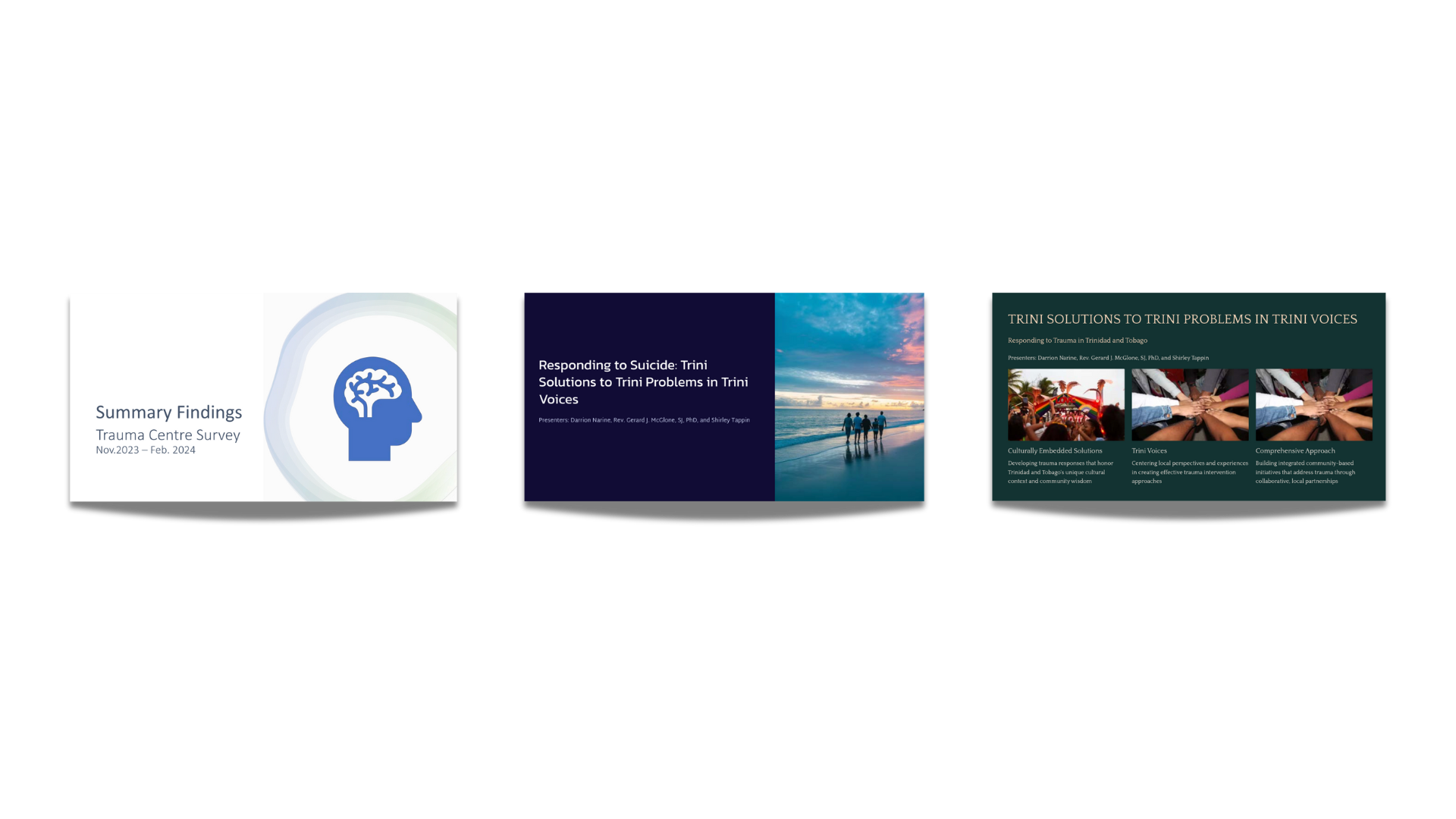
The survey conducted between November 2023 and February 2024 reveals that adolescent boys and young men (Group B: 12-19 years) are the most impacted demographic across nearly every category of abuse:
In Educational Settings:
- Cyber abuse is the leading form of harm, cited by 8 organizations
- Neglect follows closely, affecting boys who lack proper parental care, food, clothing, or shelter
- Sexual and physical abuse are reported at alarming rates
- Emotional and psychological abuse creates lasting psychological scars
Among Migrant Youth:
- Neglect is the most common experience (5 organizations reporting)
- Cyber abuse affects young migrant males who are already culturally displaced
- Racial discrimination and xenophobia compound their vulnerability
The Symptoms We’re Seeing:
According to 11 of the 16 organisations surveyed, the most prevalent impacts among youth include:
- Depression
- Suicidal thoughts
- Low self-esteem
- Acting out behaviours
- Self-harm
- Rage attacks
- Substance abuse
- Promiscuity
- Anxiety and insomnia
These aren’t just statistics. These are our sons, brothers, nephews, students, and neighbours—drowning in pain while we tell them to “man up.”
The Cultural Trap: Caribbean Masculinity and Mental Health
In Trinidad and Tobago, like much of the Caribbean, masculinity comes with an unspoken rulebook:
- Don’t cry
- Don’t show weakness
- Don’t ask for help
- Provide, protect, never break
This toxic cocktail of expectations creates what researchers call “masked depression”—where boys and young men express their emotional pain through anger, violence, substance abuse, or complete emotional shutdown rather than seeking help.
The Web of Harm
The survey identifies what researchers call the “Web of Harm”—an interconnected chain of suffering that touches everyone:
Dysfunctional Families → Chaotic Classrooms → Crime & Community Violence → Poor Academic Performance → Community Grief → Neglect and Abuse in All Forms
For young men specifically, this web creates a perfect storm:
- Home wounds (physical abuse, neglect, witnessing domestic violence)
- School harm (bullying, cyber abuse, academic pressure, violence)
- Community violence (gang activity, crime, limited opportunities)
- Digital dangers (cyberbullying, toxic masculinity online, exposure to violence)
Each link in this chain reinforces the next, creating intergenerational cycles of pain and violence where hurt boys become hurt men who raise hurt children.

The Silence That Kills
Perhaps the most dangerous finding from the survey is what’s not being said. While the data shows:
- Only 4 organisations out of 16 captured data tracking limits to access for persons needing care
- 243 nationals requiring care, but only 472 accessing it
- A massive gap between need and service delivery
What these numbers don’t show is how many boys and young men never reach out at all—silenced by shame, cultural expectations, or the belief that no one cares.
As students told Samaritan Movement researchers: “No one is listening. No one cares. We are suicidal.”
The Specific Challenges Facing Young Men
1. Cyber Abuse and Digital Violence
With 8 organisations reporting cyber abuse as a primary concern for Group B males, our young men are navigating:
- Online bullying and harassment
- Exposure to violent content
- Pressure to perform hypermasculinity online
- Cybersex exploitation
- Gaming addiction as escape mechanism
2. Educational Wounds
In schools serving over 42,000 students, young men face:
- Teacher interventions that may not account for pain responses
- Disciplinary systems that punish rather than heal
- Academic pressure without emotional support
- Peers processing their own suffering through violence or bullying
3. Neglect: The Invisible Abuse
Neglect was cited by 7 organisations as a frequent form of harm in children’s care homes and 8 organisations in educational settings. For boys, neglect often means:
- Absent fathers or male role models
- Mothers overwhelmed by economic pressures
- Lack of guidance during critical developmental years
- Food insecurity
- Inadequate clothing or shelter
- Emotional abandonment
4. The Violence Pipeline
Physical and emotional abuse, combined with exposure to community violence, creates a pipeline where:
- Hurt boys internalize violence as normal
- Emotional regulation becomes impossible
- Rage attacks become the only expression of pain
- Criminal justice involvement becomes likely
- The cycle perpetuates into the next generation
What About Adult Men? (Groups C, D, E)
The survey reveals that suffering doesn’t end at 19. Adult men (Groups C: 21-35, D: 36-59, E: 60+) face:
Organisational/Workplace Harm:
- Emotional and psychological abuse in workplace settings (6 organizations reporting)
- Spiritual or religious organizational harm
- Gender-based discrimination and abuse
The 36-59 Age Group (Group D): This demographic experiences harm across multiple domains:
- Physical abuse
- Emotional and spiritual wounds
- Occupational stress
- Family responsibilities without support systems
- Midlife crises compounded by unresolved childhood pain
Senior Men (60+): While less studied, Group E men carry:
- Decades of unprocessed pain
- Isolation and loneliness
- Health challenges
- Loss of identity after retirement
- Generational pain they may be passing to grandchildren
The Cost of Silence
When we fail to address men’s mental health, the costs compound:
Individual Level:
- Suicide (often unreported or misclassified)
- Substance abuse disorders
- Chronic health conditions linked to stress
- Destroyed relationships
- Lost potential
Family Level:
- Domestic violence
- Child abuse and neglect
- Intergenerational cycles of pain and violence
- Family breakdown
Community Level:
- Crime and violence
- Gang involvement
- Economic instability
- Erosion of social fabric
- Community grief and collective suffering
National Level:
- Healthcare system strain
- Lost productivity
- Educational system challenges
- Crime costs
- Social service demands
Breaking the Cycle: The Samaritan Movement Approach
The Samaritan Movement recognises that systemic problems require systemic solutions. You cannot heal boys and men in isolation—you must transform the entire ecosystem.

Community as Family: A Revolutionary Framework![]()
Instead of the “Web of Harm,” we’re building a “Web of Healing” through three interconnected families:
1. The Teacher Family
Teachers—many of them men who serve as critical role models—receive:
- 40 training sessions across 20 schools on regulation, de-escalation, and restorative routines
- Evidence-based toolkits specifically designed for Caribbean classrooms
- Self-care resources because you cannot pour from an empty cup
- Coaching to recognize pain responses in boys vs. defiance
When male teachers are equipped to recognize suffering, they become:
- Safe father figures for fatherless boys
- Models of healthy masculinity
- First responders to crisis
- Advocates for vulnerable students
Impact: 1,000+ teachers reached, transforming environments for 50,000+ students
2. The Student Family
Direct interventions reaching 10,000+ students include:
- Arts therapy integration that allows boys to express emotions through culturally relevant forms like spoken word, drama, and music
- Drama therapeutic interventions where young men can explore identity and pain safely
- Supportive environments with calming spaces and sensory supports
- Healing-centered literacy programs because a regulated child is a focused child
- Peer support networks where young men support each other
Critical Focus for Boys:
- Creating safe spaces for emotional expression without judgment
- Redefining masculinity through Caribbean cultural strengths
- Mentorship programs connecting boys with healthy male role models
- Sports and movement as emotional release
- Life skills and conflict resolution training
3. Parenting for Hope & Healing
Reaching 100,000+ parents through:
- Parent circles where fathers can share experiences without shame
- Trini Stories featuring local fathers modelling healthy parenting
- Spiritual and cultural tools honouring faith traditions as sources of strength
- Family systems support addressing whole-family pain
- Father-specific programming recognizing unique challenges men face in parenting
Why This Matters for Sons:
- Boys need fathers who are healing, not hurting
- Modelling healthy emotional expression starts at home
- Breaking cycles of abuse requires parent transformation
- Economic pressures on families must be acknowledged and addressed
Evidence-Based, Culturally-Inspired: Why This Works
The Samaritan Movement doesn’t import foreign models and hope they work. We:
1. Begin by Listening
“We begin by listening; we train by listening, we change by listening.” This principle is especially critical for men who’ve been told their entire lives that no one wants to hear their pain.
2. Use Caribbean Cultural Strengths
- Storytelling traditions become therapeutic tools
- Music and rhythm facilitate emotional release
- Community and extended family networks become support systems
- Faith and spirituality provide meaning and resilience frameworks
- “Liming” and fellowship reimagined as peer support
3. Address Root Causes
We don’t just treat symptoms; we transform systems:
- Poverty and economic stress
- Absent fathers and broken families
- Educational systems designed to punish, not heal
- Community violence and crime
- Digital dangers and cyber threats
- Substance abuse and addiction pathways
4. Measure What Matters
Our success metrics for male mental wellness include:
- Reduction in suicidality and suicides among boys and young men
- Reduction in violence in schools and communities
- Increased self-confidence and self-worth in male students
- Improved academic performance when pain is addressed
- Increased sense of safety (measured by reduction in suspensions)
- Father engagement in children’s lives and education
- Male mentor involvement in community programs
The Path Forward: What Men Need Right Now
Based on the survey recommendations from 12 organisations, here’s what Trinidad and Tobago’s men and boys desperately need:
Immediate Needs:
- Institutional Counsellors (14 organisations requesting)
- Male counsellors in every school
- Counsellors who understand Caribbean masculinity
- Immediate crisis intervention capabilities
- Specialised Therapists (12 organisations requesting)
- Specialists in childhood and adolescent suffering
- Male therapists for male clients
- Affordable or free services
- Mentors (13 organisations requesting)
- Positive male role models in every community
- Big Brother programs scaled nationally
- Faith-based and secular mentorship networks
- Psycho-Educational Training (15 organisations requesting)
- Teaching emotional literacy to boys
- Redefining healthy masculinity
- Coping skills and stress management
- Anger management that actually works
- Continuous Assessment (14 organisations requesting)
- Regular mental health screening in schools
- Early intervention before crisis
- Tracking progress and adjusting approaches
Systemic Changes:
In Schools:
- Healing-informed discipline that doesn’t criminalize hurting boys
- Male teachers trained in mental health first aid
- Restorative justice approaches instead of suspension
- Athletic and arts programs as therapeutic outlets
- Safe spaces for boys to process emotions
In Communities:
- Community violence interruption programs
- Job training and economic opportunity for young men
- Recreation spaces and positive outlets
- Faith-based healing circles for men
- Anti-crime initiatives that address pain’s roots
In Families:
- Father re-engagement programs
- Parenting support specifically for men
- Family therapy accessible and affordable
- Economic support to reduce family stress
- Programs healing men who were abused as boys
In Healthcare:
- Male-friendly mental health services
- Reduced stigma campaigns
- Walk-in crisis services
- Integration of mental health in primary care
- Substance abuse treatment with healing focus
In Policy:
- National mental health strategy with male focus
- School counsellor ratios improved
- Mandatory healing-informed training for teachers
- Funding for community-based programs
- Violence prevention rooted in understanding pain
The Stories We’re Not Telling
Behind every statistic is a story. The 12-year-old boy acting out in class because he witnessed his mother being beaten last night. The 16-year-old who’s cyberbullied for not being “man enough” and considers suicide. The 25-year-old trapped in gang life because no one offered him another path. The 45-year-old father who loves his children but doesn’t know how to stop yelling because his father yelled at him. The 65-year-old grandfather carrying 50 years of pain he’s never spoken about.
These are our men. These are our boys. And they’re telling us they’re hurting—if only we’d listen.
A Vision of Healing
Imagine a Trinidad and Tobago where:
- Boys cry without shame and grow into men who can express emotion
- Fathers are present, healed, and actively parenting
- Schools are therapeutic communities, not pain factories
- Young men have mentors who guide them toward purpose
- Mental health help-seeking is seen as strength, not weakness
- Suffering is addressed immediately, not ignored until crisis
- Communities wrap around struggling families with support
- Violence decreases because hurt people get healing, not punishment
- Success is measured by emotional wellness, not just economic status
- Every boy knows he matters, he’s valued, and he’s not alone
This isn’t fantasy. This is the Community as Family vision—and it’s already happening in 70+ schools reaching 50,000+ students.
The Crisis We Can’t Ignore
The survey makes one thing painfully clear: We are losing our boys and men to silent suffering. Group B (12-19 year old males) are experiencing harm at epidemic levels across every measured category. If we don’t intervene now, these hurting adolescents become hurting adults who raise hurting children—and the cycle continues.
But here’s the hope: Pain can be healed. Cycles can be broken. Men can recover.
The research is clear. The model is proven. The need is urgent. What’s missing is the collective will to say: Our men matter. Our boys matter. Their pain matters. Their healing matters.
The Time is Now
We have one year, one nation, one chance to break generational cycles of pain and violence. Behind every number in this survey is a boy or man suffering in silence, wondering if anyone cares, if anyone sees his pain, if there’s any hope.
Together we heal. Community as family. Success is healing.
The question isn’t whether we can afford to address men’s mental health crisis in Trinidad and Tobago.
The question is: Can we afford not to?
Our boys are crying out—through violence, through silence, through substances, through suicide attempts. They’ve told us they’re hurt. They’ve told us they need help.
Will we listen?
#BecomeASamaritan #TogetherWeHeal #CommunityAsFamily #BoysNeedHealing #MensMentalHealthMatters #BreakTheCycle
The Samaritan Movement operates under the Catholic Commission for Social Justice, led by Research Fellow Father Gerard McGlone (Georgetown University) and a team of specialists in healing and restoration. For more information, partnership opportunities, or to support this work, visit SamaritanMovement.org or contact the team directly.
This blog post is based on the Trauma Centre Survey conducted November 2023 – February 2024, with data from 16 organisations serving over 480,000 people across Trinidad & Tobago.