
40% of children surveyed want to harm themselves.
Read that again. Four out of ten young people in Trinidad and Tobago are contemplating self-harm.
If you work with youth, raise them, or serve them professionally, this number should stop you in your tracks. Because statistically, in a classroom of 30 students, 12 are silently struggling. In your parish youth group. On your child’s sports team. In every community across our nation.
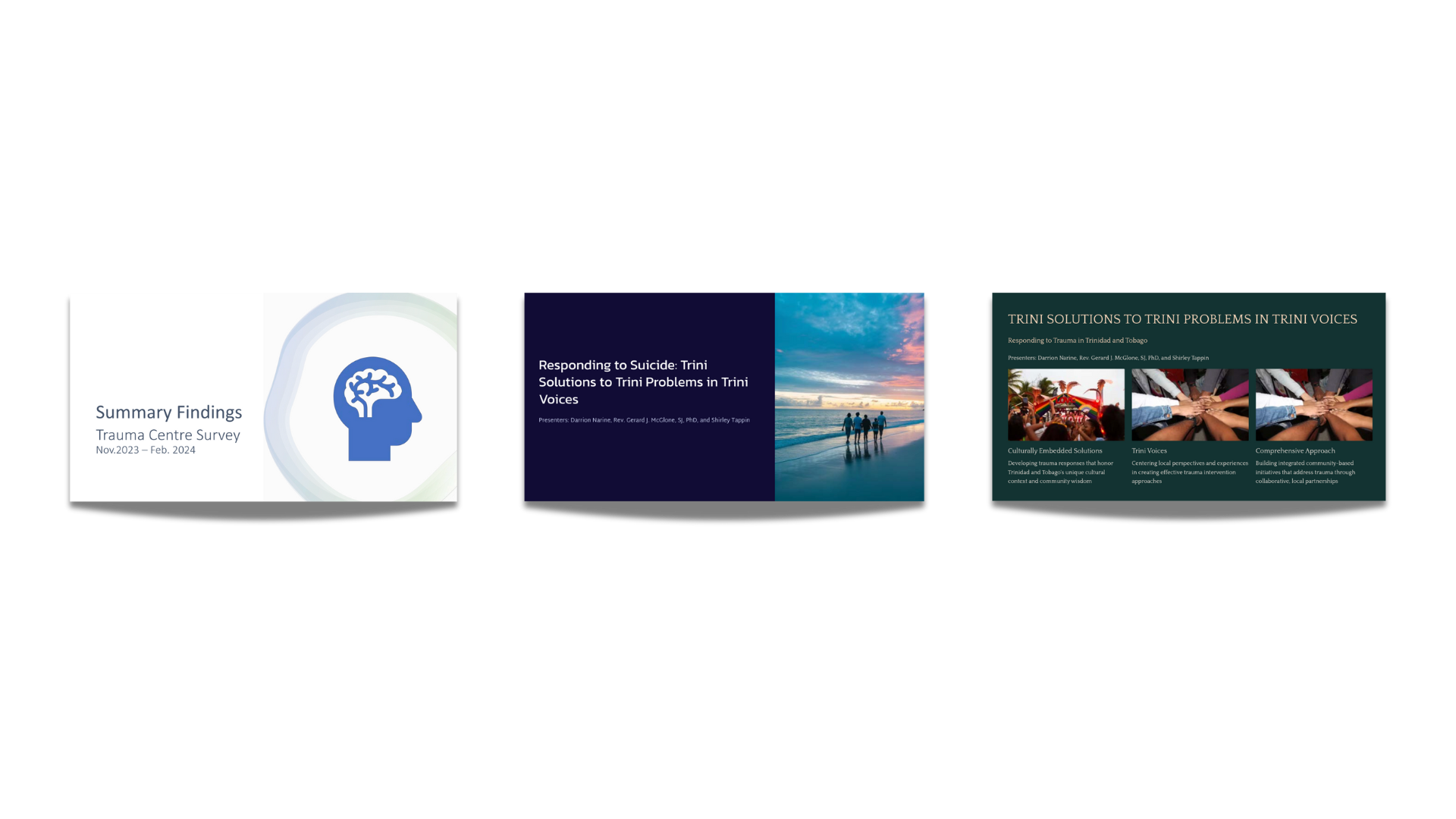
This isn’t speculation. Between November 2023 and February 2024, a comprehensive trauma survey across Catholic organisations revealed what many of us have been sensing but couldn’t quantify: our children are in crisis.

The Scale of What We’re Facing
The survey reached organisations serving over 481,000 people directly—including:
-
- 42,710 students
-
- 2,488 teachers
-
- 552 school staff
-
- Millions more through media and indirect services
This is the largest systematic examination of youth trauma in our nation’s recent history. And the findings demand our immediate attention.

What’s Hurting Our Children: The Data Breakdown
Researchers examined eight categories of trauma across multiple settings. Here’s what they found:
In Our Schools (Ages 12-19 Hit Hardest)
The two most prevalent traumas:
-
- Cyber abuse – Online bullying, harassment, and digital threats (8 organisations reported this)
-
- Neglect – Lack of parental care, food, clothing, shelter (8 organisations reported this)
Sexual and emotional abuse followed closely, each identified by 7 organisations.
Even primary school children (ages 0-11) aren’t safe: 5 organisations reported cyber abuse affecting young children, while 3 reported significant neglect.
In Care Homes
Our most vulnerable children face neglect as the primary trauma, with adolescents bearing the heaviest burden. Sexual abuse (6 organisations) and physical abuse (6 organisations) compound their suffering.

In Migrant Communities
Young migrants experience severe neglect, especially those aged 12-19 (5 organisations). Cyber abuse runs second, targeting both young children and teens—vulnerability layered upon vulnerability.

In Parish Communities
Adults aren’t exempt. Physical and emotional abuse occur most frequently (6 organizations each), while cyber abuse affects children within these community structures.

What Trauma Looks Like in Your Daily Life
Eleven organisations identified these impacts as most common:
The Big Five:
-
- Depression
-
- Suicidal thoughts
-
- Low self-esteem
-
- Self-harm
-
- Acting out behaviours
Following Close Behind:
-
- Rage attacks
-
- Promiscuity
-
- Substance abuse
-
- Sex/pornography addictions
-
- Anxiety and insomnia
-
- Psychosomatic disorders
For Educators
That “problem student” who disrupts your class? They may be acting out trauma. That quiet child who never participates? They might be battling depression you can’t see.
For Parents
Your teenager’s sudden withdrawal, anger, or mood swings might not be “just a phase”—they could be symptoms of trauma that needs addressing.
For Professionals
The behavioural issues you manage daily may have roots in childhood experiences that were never properly addressed. You’re treating symptoms while the wound remains open.
The Generational Pattern We Must Break
Here’s what makes this crisis even more urgent: we’re not just dealing with current trauma. We’re dealing with cycles passed down through generations.
Parents who experienced abuse but never healed often unconsciously repeat patterns with their children. Teachers carrying their own unresolved pain struggle to support students. Communities wounded by historical injustices continue bleeding without intervention.
One survey respondent captured it perfectly: “Teachers need these services.”
Because you can’t pour from an empty cup. You can’t heal others while you’re drowning.
We need Trini solutions for Trini mental health.
The Question We Must Answer
The data is clear. The crisis is real. The gaps are massive.
But here’s what the survey really tells us: children are sending distress signals, and adults are struggling to respond effectively.
Not because we don’t care. We care deeply.
Not because we’re not trying. We’re exhausted from trying.
But because we lack the training, resources, and systems needed to meet the scale of this crisis. This is the reality we’re facing. It’s sobering. It’s urgent. And it’s happening right now in our schools, homes, and communities.
But here’s what’s important: Recognition is the first step toward healing.
Now that we see the problem clearly, we can build solutions intentionally.
In our next post, we’ll explore exactly how to do that—the tools, resources, and practical actions every teacher, parent, and professional can take starting today.
Because 40% of our children are contemplating self-harm. But 100% of them can be reached if we respond with knowledge, compassion, and effective support.